The word of Kabuki(歌舞伎) consists of three Kanji (Chinese characters):歌(ka) which means singing, 舞(bu) which means dancing and 伎(ki) which means skill or technic. As its name shows, Kabuki performance is made of three main components: dancing, singing and acting.
Soon after its birth at the beginning of the 17th century in Kyoto, Kabuki became popular among commoners. As a matter of fact, its popularity soon arrived in Edo, where the newly established government (Tokugawa Shogunate) was placed.
Thus, Edo and Kyoto formed the two biggest centers of Kabuki culture.
Guaranteed enormous fees, popular Kabuki actors gave their performances in both of them. Naturally, it caused frequent and long trips of their troupes. Since they had to walk such a long distance, they often took a detour and gave performances on their way.
The era without movies and television. There’s no wonder that the inhabitants enthusiastically welcomed the actors. People were yearning for their arrival.
Attracted by their hospitality, some actors began to settle down in these places. Some of them organised their own troupes and taught the participants how to act, dance and play musical instruments.
Shimojo village is one of these selected places.
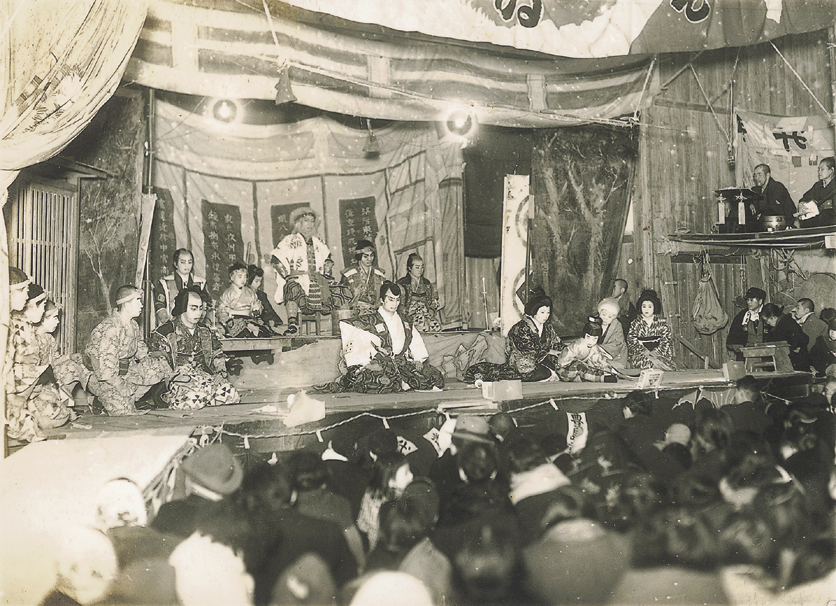
more than 300-year-old history
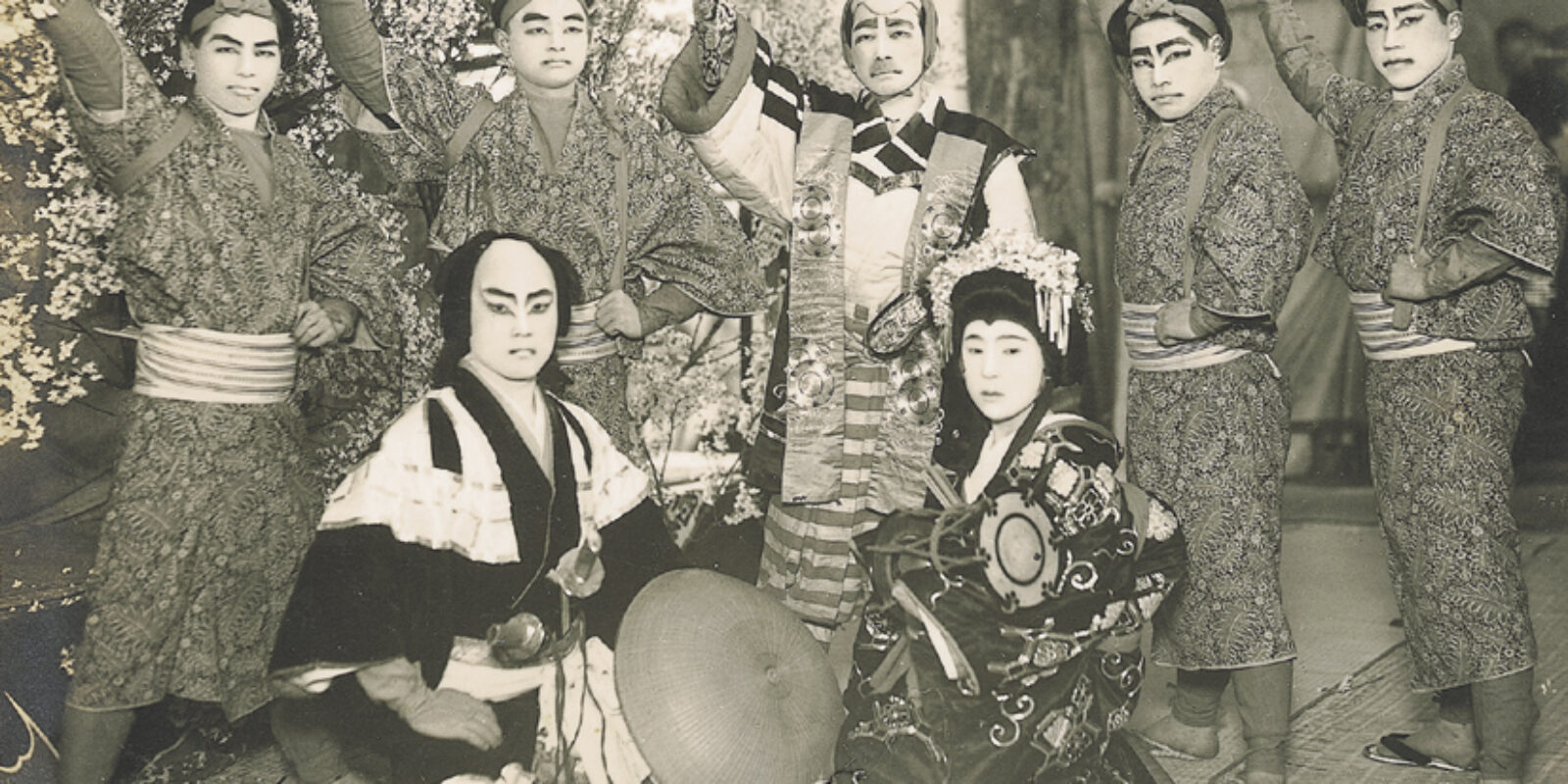
The history record of Simojo Kabuki can be traced back as early as 1701 (Edo period). The Shimojo clan, who ruled this area from the middle of the 14th century to the end of 16th century, employed Sarugaku performers and encouraged the performing arts. Incidentally, Sarugaku is one of the origins of Noh, which is the representative Japanese traditional performing art, together with Kabuki. This cultural atmosphere nurtured by Shimojo clan is thought to be the foundation for the later development of Kabuki.
However, as Japanese society underwent major changes, Shimojo Kabuki also faced difficult times. Around 1955, with the spread of Movie and television, Shimojo Kabuki’s activities began to decline like many other local theaters and its survival was in jeopardy.
In response to this situation, young villagers, determined to pass on Shimojo Kabuki to the next generation as part of the village’s culture, stepped up. They formed the “Youth Kabuki” group, which led to the founding of the “Shimojo Kabuki Preservation Society” in 1971.
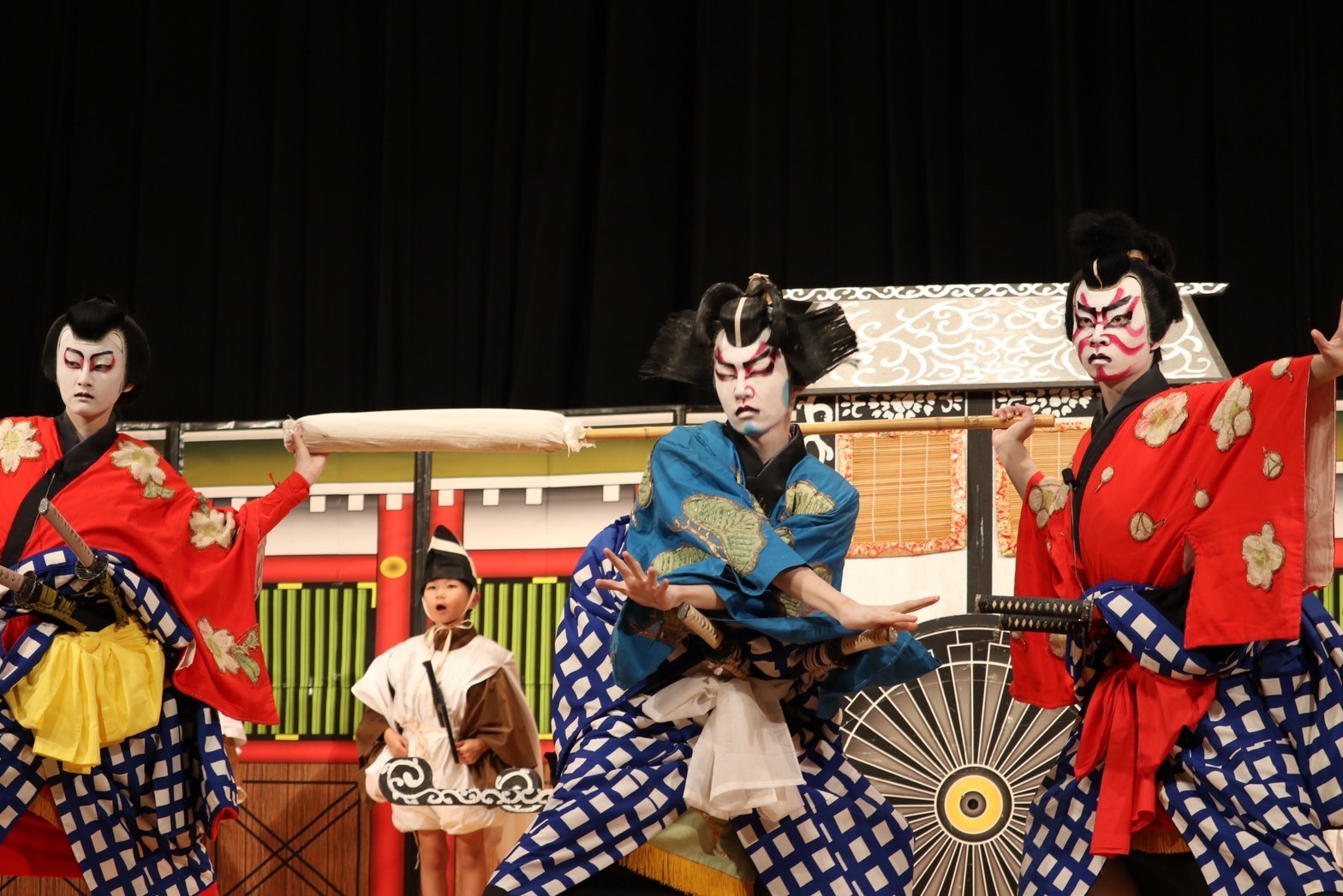
Kabuki stage
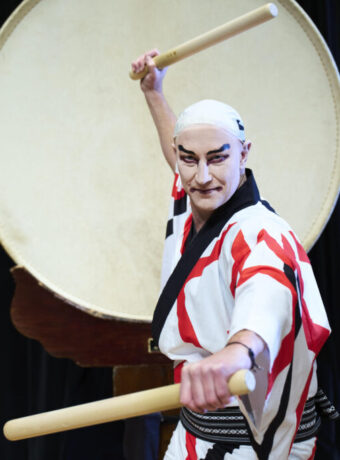
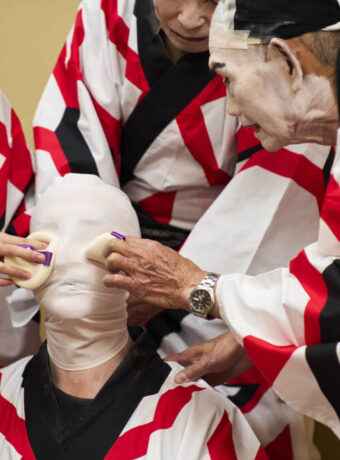
The characteristic features of Kabuki lie in a combination of exaggerated rhythmic words, movement, as well as carefully prepared make-up.
In addition, the kabuki stage has very unique features. For example, the Hanamichi (an elevated runway through the audience) allows the spectator to take a closer look at actors. A revolving stage allows for quick scene changes, and trapdoors in the stage and in the Hanamichi enable actors’ dramatic appearances.