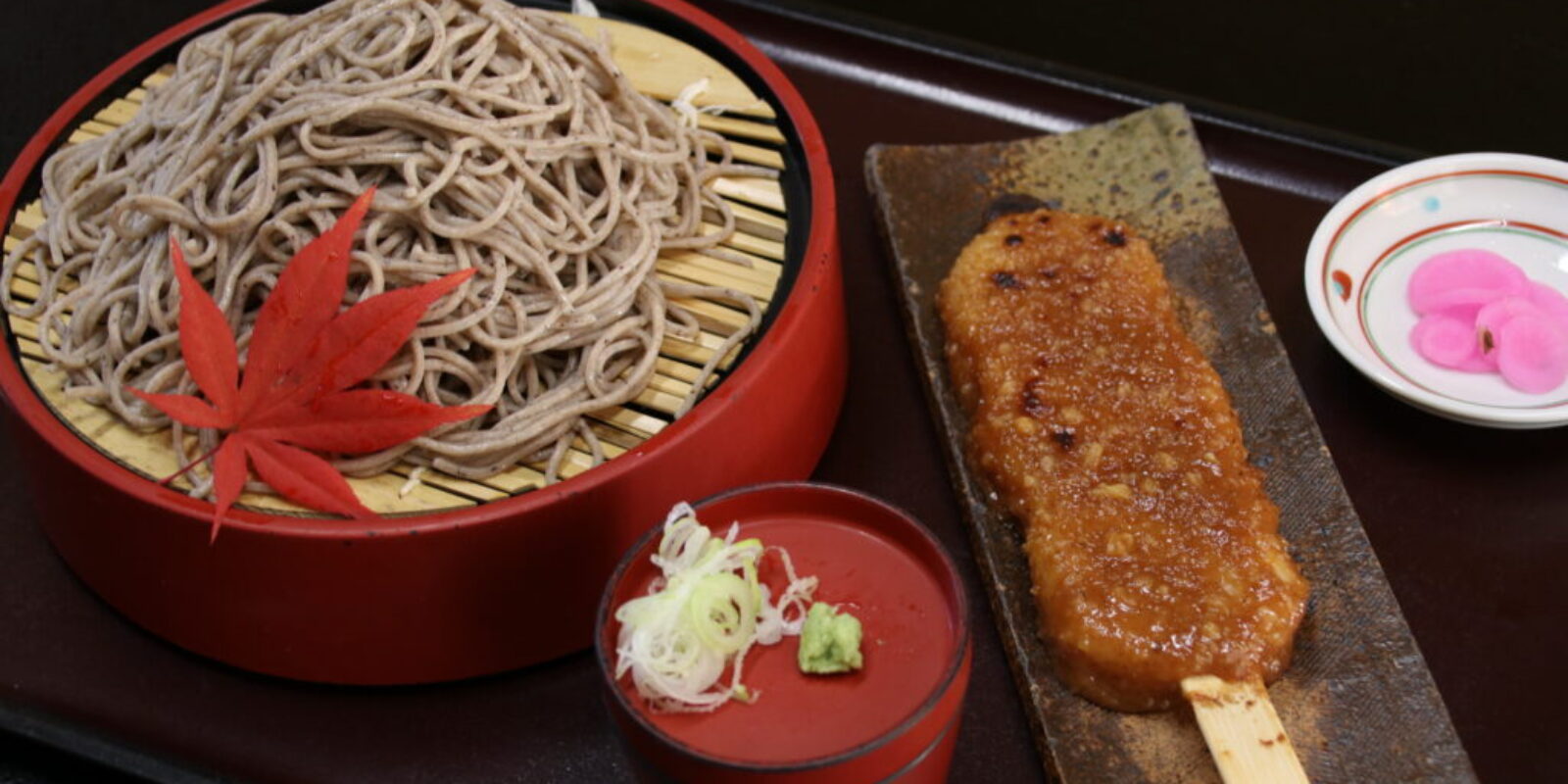
Soba
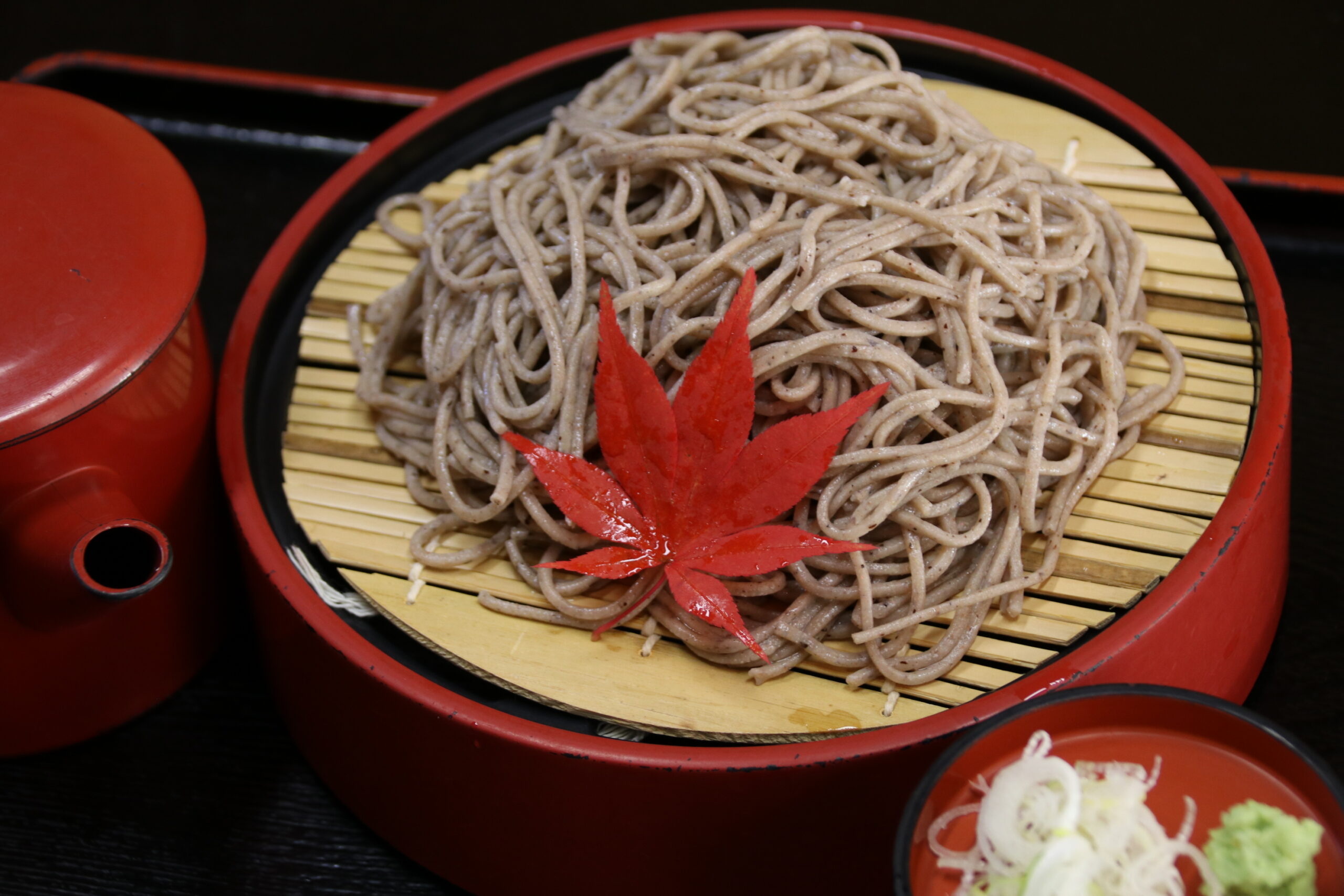
Soba, which is Japanese traditional noodles made from buckwheat flour, is a representative local dish of Nagano Prefecture. Because the cool climate of the highlands, where rice and wheat are difficult to grow, is ideal to cultivate Soba. In the cool, frost-sensitive highlands around 700 meters above sea level, where morning mist hangs, the mist gently protects the frost-sensitive soba, resulting in delicious soba. In addition, over 90% of wasabi, an essential condiment for soba, is also produced in Nagano. Wasabi grown with meltwater from the Northern Alps is characterized by its smooth texture and mellow richness, and not only is it spicy, it also brings out the sweetness of the soba.
Commonly, we eat soba noodles by dipping them in cold soba soup with green onions and wasabi. But it is also served in hot broth.
This restaurant is famous for 100% buckwheat soba. Commonly, wheat flour is used as a binder. What is the difference between 100% buckwheat soba and regular soba? 100% buckwheat soba has a strong flavor and aroma, and a unique chewy, crumbly texture.
Let’s taste them.
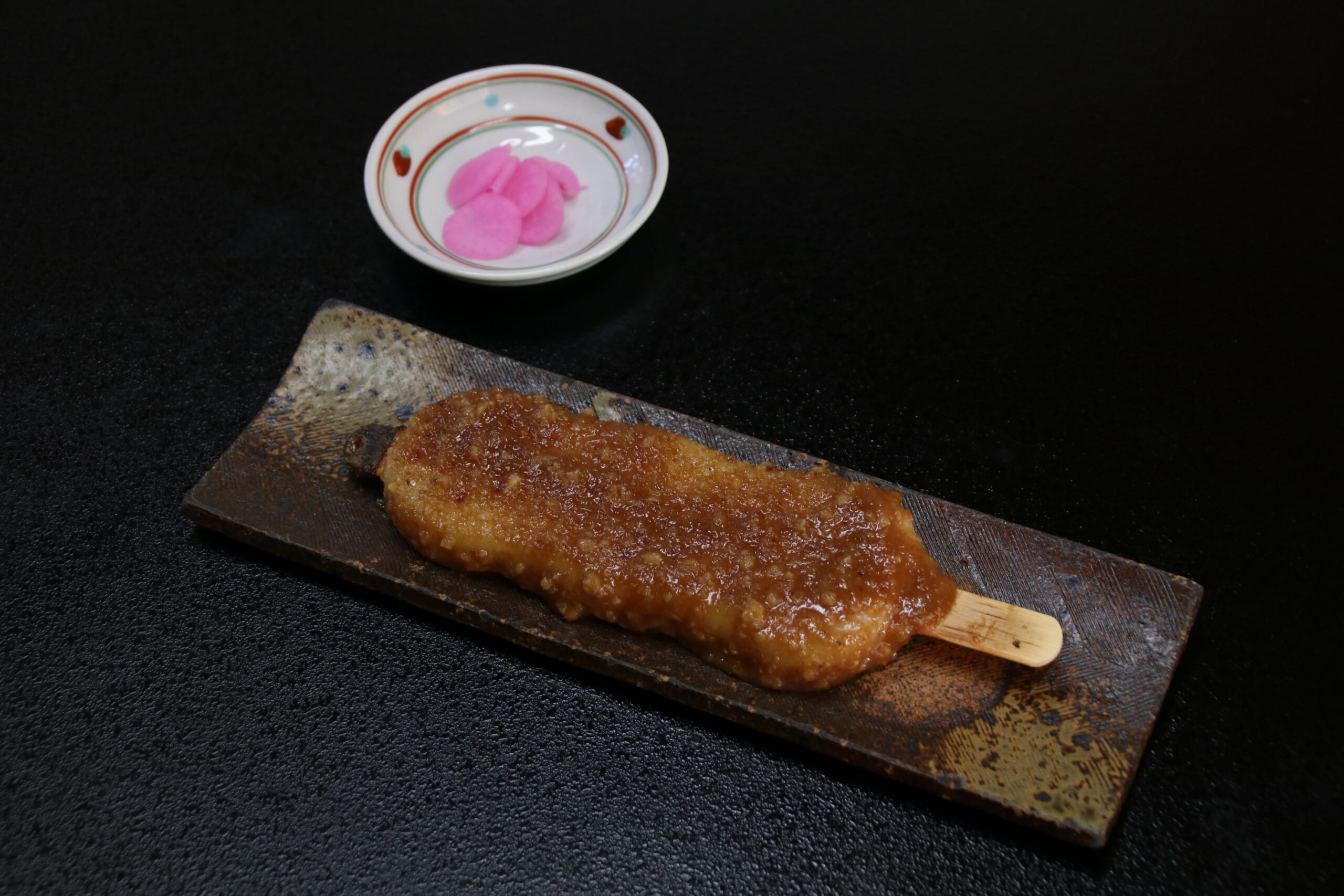
Gohei Mochi
Gohei mochi is a traditional Japanese regional food.
It consists of charcoal-grilled rice dumplings smeared with a special sauce made with walnuts and sesame seeds. Its simple yet rich flavor is said to date back to the Edo period (17-19th century). Originated in the area centered around Nagano Prefecture, Gohei mochi has developed as a portable and preservable food made with rice, not only for travelers to carry along on their journeys, but also for farmers and woodworkers to get enough nutrients during their work. It has played an important role in the food culture of people living in mountainous regions. Interestingly, it has evolved in its own unique way in each region. In Nagano, it is characterized by a sweet and spicy sauce based on walnuts and miso. With such a historical background, Gohei mochi has transcended the ages and remains beloved by many people today.
Soba